
Classification of flooring (Part 1)
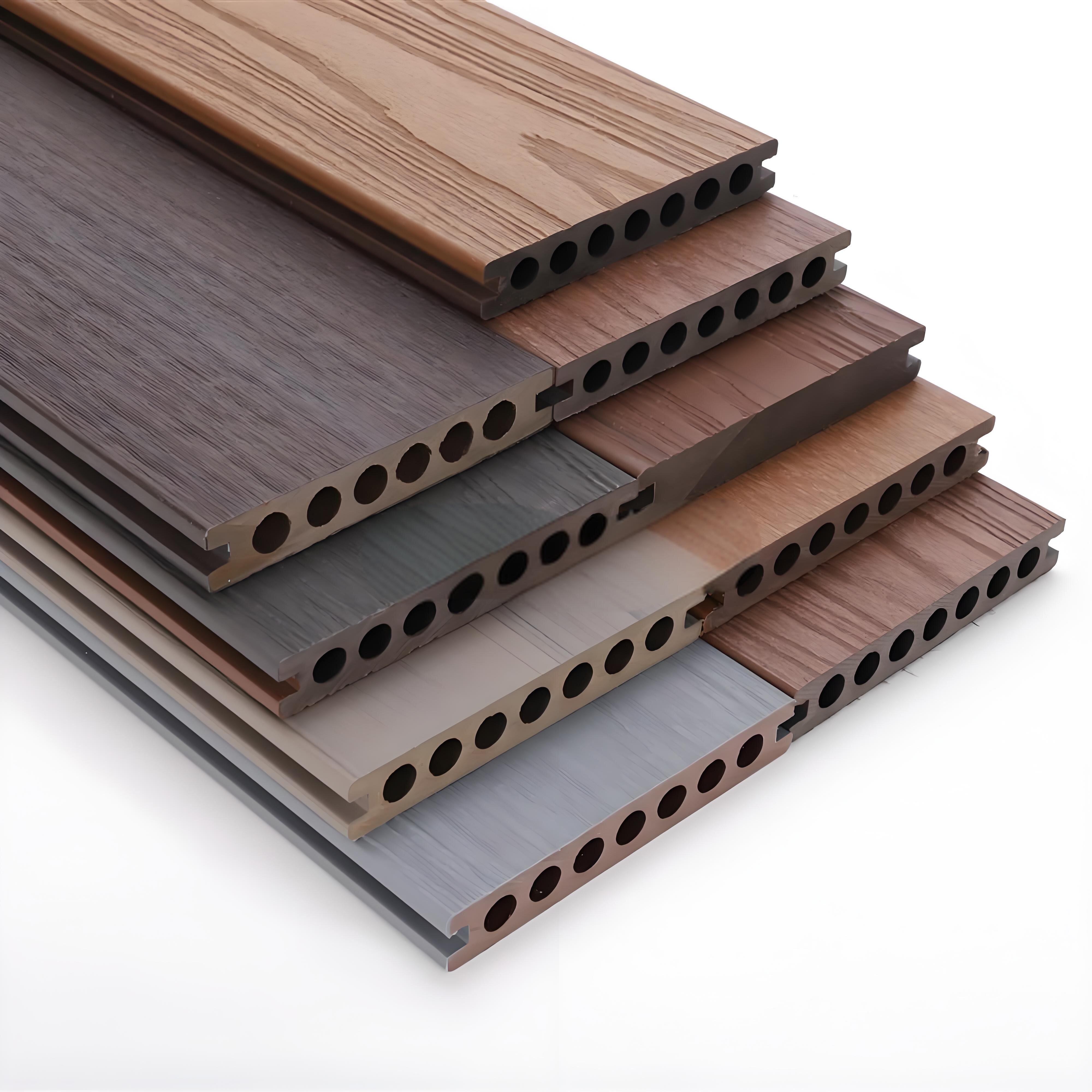
The common flooring in the market can be divided into five categories: reinforced composite flooring, solid wood composite flooring, solid wood flooring, bamboo flooring, and cork flooring.
(1)Reinforced composite floor
The meaning of laminate is to put thin sheets together. So the production process of reinforced composite flooring is to bond the bottom layer of fiberboard, the middle layer of decorative stickers, and the top protective layer together through multiple processes of glue and high pressure. After cutting, it becomes our common composite flooring. The reason why we often see various styles of composite flooring is because the decorative stickers in the middle are really just specially treated "printing paper".
A good reinforced composite floor usually has a thickness of only 10 millimeters, which is half of solid wood flooring. Although its texture is not as high as solid wood flooring, its wear resistance is exceptionally amazing. When heavy objects fall from a height, solid wood flooring is likely to leave dents on the surface, while reinforced composite flooring generally does not leave any marks. The drawback of reinforced composite flooring is that with current technology alone, its aesthetic appeal cannot be compared to solid wood flooring. Moreover, reinforced composite flooring is more sensitive to water, especially the edges of the floor are easily deformed and discolored.
Advantages: Good visual effect, a wide variety of colors and patterns, simulating various natural or artificial patterns. The overall effect of the laid ground is good, and the color is uniform; Higher wear resistance, 10-30 times that of solid wood flooring, and higher flame retardancy, strong resistance to pollution and corrosion, good compressive and impact resistance. Easy to lay, convenient for cleaning and care, using suspended laying.
Disadvantages: Cannot be refurbished, not water-resistant, not moisture resistant, and has chemical safety hazards.

(2) Engineered hardwood flooring
The production methods of solid wood composite flooring and reinforced composite flooring are similar, with the bottom layer generally made of plywood, but the difference is that the surface layer of solid wood composite flooring is made of real wood. Machine processed solid wood composite flooring sometimes has better hardness, strength, and flatness than solid wood flooring. Although it is composite, the solid wood surface still gives a high-end feeling, and the price is more economical than solid wood flooring. Installation is faster, and if the floor color needs to be changed or repaired in the future, it can be recolored like solid wood flooring. The disadvantage is that if the quality of the adhesive does not meet the standard, it may cause certain pollution to the living environment.
Advantages: Good stability, made by interlocking and laminating boards of different tree species, which largely overcomes the anisotropy defects of natural wood, has a low dry shrinkage and swelling rate, excellent balance and stability of the product, and its deformation coefficient is only a fraction of that of solid wood flooring, while retaining the natural wood grain and comfortable foot feel of solid wood flooring, and greatly improving cost-effectiveness. Installation is more convenient, using a suspended installation method, greatly reducing installation costs and time.
Disadvantages: Cannot be repeatedly renovated, and its service life is not as good as pure solid wood flooring. If the quality of the adhesive does not meet the standard, it may cause certain pollution to the living environment.
Classification of flooring(Part 2)
Related Article
