Classification of flooring(Part 2)
(3) Solid wood flooring
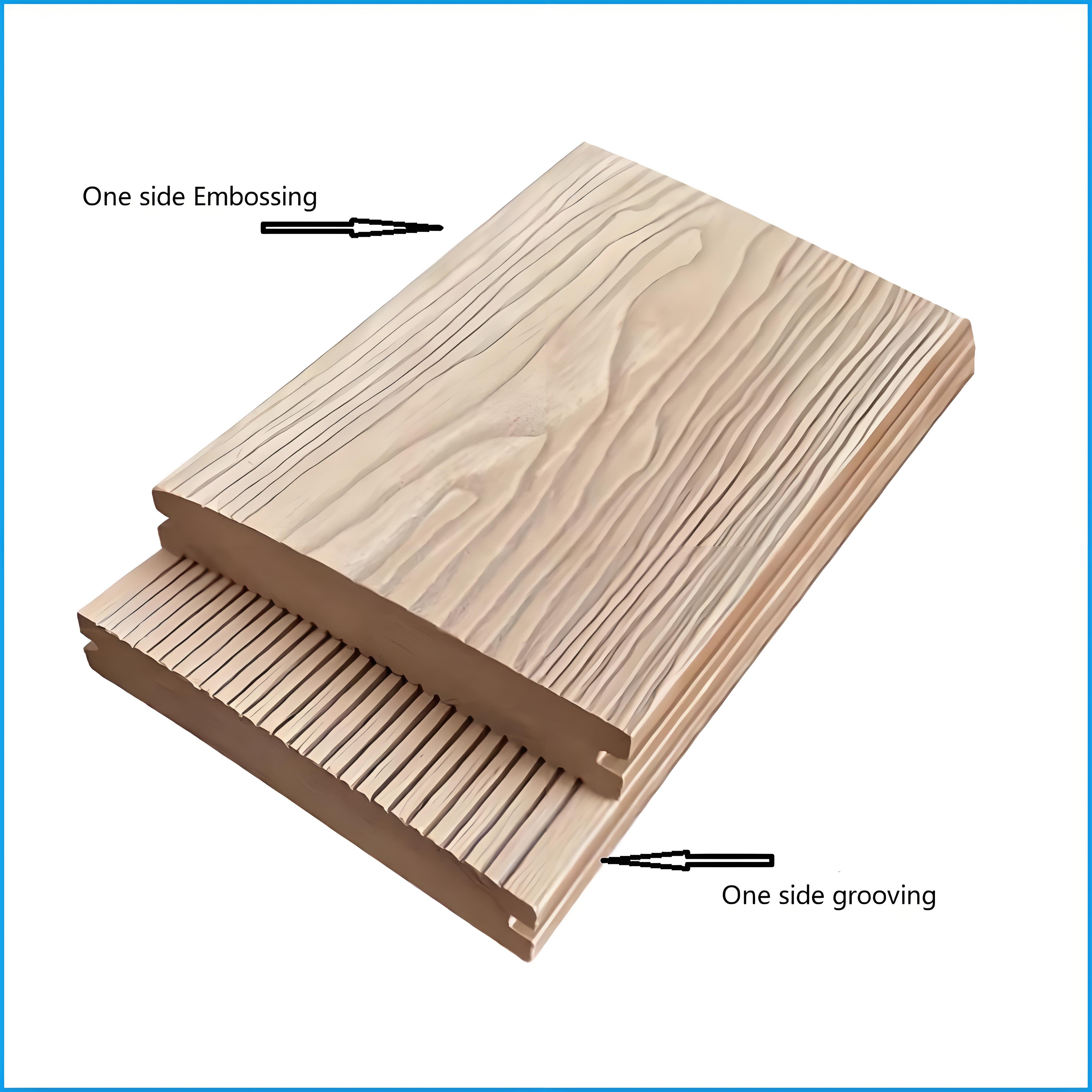
Solid wood flooring is more beautiful, durable, and has good insulation properties. After a few years, if you become tired of colors, you can recolor them without dismantling them. The shortcomings are generally high prices and high requirements for the moisture content in daily air. If there is too little moisture in the air, gaps may appear in the middle of the floor. The most common solid wood flooring materials in Canada are red maple, maple, and cherry wood.
Solid wood flooring uses the least amount of chemical materials during the production process, and solid wood flooring purchased from legitimate channels is the safest for human health. The initially cut wood that arrives at the factory will be placed in a drying oven for air drying, which requires reducing the moisture content of the logs to 7%. Afterwards, the wood will be classified and cut on a semi-automatic production line. If no coloring is needed, the wood can be packed directly. If the production is colored flooring, there will be 8 different coatings on the surface of the wood to ensure the durability of the product.
Advantages: Solid wood flooring has a full color, looks classy, and has good durability. Even if scratches and wear occur, it can become as smooth as new after polishing and painting. In places that are not too humid, solid wood flooring is a "lifelong" choice.
Disadvantage: Regular maintenance is required, and the surface needs to be refurbished at regular intervals. Cannot get damp, otherwise it is easy to mold. The installation is complex and the cost is high.
(4) Bamboo Floor
Bamboo flooring, due to its complex manufacturing process and numerous procedures, requires at least a dozen processes including manual collection, machine cutting, high-pressure pressing, and 8-10 types of coatings. So the price of high-end bamboo flooring is not much lower than that of solid wood flooring. But because of its high density, rich bamboo patterns, and uniform color. Not easily deformed, with good toughness, sturdy and durable, smooth texture, soft color, environmentally friendly, and has also been popular in recent years.
Advantages: Warm in winter and cool in summer, minimal color difference, long lifespan (up to 20 years or more). Good stability, bamboo flooring has less shrinkage and expansion than solid wood flooring.
Disadvantages: It is prone to delamination and scratching due to exposure to sunlight and moisture.
(5) Cork Flooring
Cork flooring is known as the 'consumption at the top of the floor pyramid'. The main material is oak bark, which is more environmentally friendly, soundproof, and moisture resistant compared to solid wood flooring. It has elasticity and toughness. Very suitable for families with elderly and young children, it can provide cushioning, reduce the degree of injury after falling, and can be installed without dismantling the old floor. The installation cost is lower than that of solid wood flooring.
Advantages: Compared with solid wood flooring, it is more environmentally friendly, soundproof, and has better moisture resistance, providing excellent foot feel; Wooden flooring is soft, quiet, comfortable, wear-resistant, and slip resistant, providing great cushioning for the elderly and children in case of accidental falls; The unique sound absorption effect and insulation performance are also very suitable for places such as bedrooms, conference rooms, libraries, recording studios, etc.
Disadvantages: Poor wear and pressure resistance, easy to accumulate dust, inferior waterproof and anti-corrosion performance compared to reinforced flooring, and more prone to moisture infiltration.

Classification of flooring(Part 3)
Classification of flooring (Part 1)
Related Article
