How to Clean PVC Flooring: A Complete Guide to Daily Cleaning and Maintenance
How to Clean PVC Flooring: A Complete Guide to Daily Cleaning and Maintenance
PVC flooring has become a popular flooring choice for homes, hospitals, schools, offices, and other commercial spaces due to its durability, water resistance, and easy maintenance. However, proper cleaning is essential to maintain its appearance and extend its service life.
If you are wondering how to clean PVC flooring, this guide will explain practical cleaning methods, recommended tools, common mistakes to avoid, and useful maintenance tips. We will also explore what PVC flooring is and what PVC-free flooring means.
1. What Is PVC Flooring?
Before learning how to clean PVC flooring, it is helpful to understand the material itself.
What is PVC flooring? PVC flooring is a type of resilient flooring made with polyvinyl chloride (PVC), a synthetic polymer widely used in construction and interior decoration.
PVC flooring is available in several forms, including vinyl sheet flooring, vinyl tiles, luxury vinyl tiles (LVT), and certain rigid-core flooring products.
Depending on its construction and surface treatment, PVC flooring can offer several practical advantages:
-
Water-resistant surfaces suitable for many indoor applications
-
Comfortable walking surfaces compared with many hard floor finishes
-
A wide variety of colors, patterns, and designs
-
Straightforward routine cleaning and maintenance
-
Options suitable for residential and commercial environments
Commercial PVC flooring is widely used in healthcare facilities, educational buildings, offices, retail stores, and public spaces where regular cleaning is important.
Different PVC flooring products may require different maintenance procedures, so always check the manufacturer's cleaning recommendations before using detergents or equipment.
2. How to Clean PVC Flooring Step by Step
Cleaning PVC flooring does not usually require complicated equipment or expensive cleaning products. A consistent cleaning routine can help prevent dirt accumulation, staining, and premature surface wear.
Step 1: Remove Dust and Loose Dirt
Start by removing dust, sand, and other loose particles from the floor.
Use a soft-bristle broom, microfiber dust mop, or vacuum cleaner with a suitable hard-floor attachment.
This step is particularly important in high-traffic areas because small particles can act as abrasives when people walk across the flooring.
For commercial environments, daily dust removal can help maintain a clean and professional appearance.
Step 2: Prepare a Mild Cleaning Solution
Fill a bucket with clean water and add a small amount of pH-neutral floor cleaner approved for the flooring.
Avoid using highly acidic or alkaline detergents unless the flooring manufacturer specifically recommends them.
Strong chemicals may damage certain surface finishes or leave unwanted residues.
For routine cleaning, a properly diluted neutral cleaner is usually sufficient.
Step 3: Mop the Floor Gently
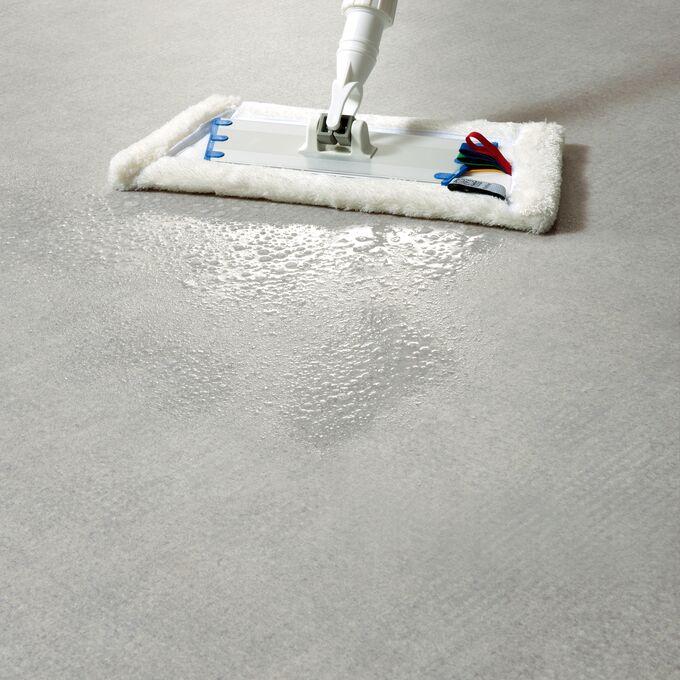
Use a clean microfiber mop to wipe the flooring surface.
The mop should be damp rather than excessively wet. Although PVC flooring is generally water-resistant, excessive water can enter joints, seams, or damaged edges in some installations.
Work across the floor in manageable sections, paying additional attention to frequently used areas.
Avoid abrasive scrubbing pads or stiff brushes that could scratch the protective surface.
Step 4: Remove Cleaning Residue
If the cleaning product requires rinsing, use a separate damp mop with clean water to remove any remaining detergent.
Cleaning product residue can make the floor appear dull or attract additional dirt.
Follow the cleaner's instructions to determine whether rinsing is necessary.
Step 5: Allow the Floor to Dry
After cleaning, allow the floor to dry before reopening the area to regular foot traffic.
For commercial buildings, appropriate warning signs should be placed around wet flooring to reduce slipping risks.
Good ventilation can help the surface dry more efficiently.
By following these steps, PVC flooring can remain clean and attractive without unnecessarily damaging its protective finish.
3. How to Remove Common Stains from PVC Flooring
In addition to routine cleaning, PVC flooring may occasionally develop stains from food, beverages, dirt, or other substances.
Different stains require different cleaning approaches.
Food and beverage stains
Remove spills promptly with a soft cloth and a manufacturer-approved mild cleaning solution. Avoid allowing liquids to remain on the flooring for extended periods.
Footprints and surface marks
Use a damp microfiber cloth and a suitable neutral cleaner. For persistent marks, consult the flooring manufacturer's recommendations before using stronger products.
Grease and oil stains
Remove excess grease carefully and clean the affected area using a compatible floor-cleaning product. Avoid aggressive solvents unless specifically approved.
Ink and difficult stains
Some stains may require specialized cleaning products. Test any product on a small, inconspicuous area first and follow the manufacturer's instructions.
For all stain removal procedures, avoid excessive scrubbing, sharp tools, and unapproved chemical treatments.
4. Common Mistakes to Avoid When Cleaning PVC Flooring
Understanding how to clean PVC flooring also means knowing which cleaning methods can cause unnecessary damage.
One common mistake is using harsh chemicals or highly concentrated cleaning solutions. These products may affect the flooring's protective surface or change its appearance.
Another mistake is using abrasive brushes, steel wool, or rough cleaning pads. Repeated aggressive scrubbing can damage the surface finish.
Excessive water should also be avoided, particularly on flooring systems with joints or areas where moisture could penetrate beneath the installed material.
Steam cleaning is not universally suitable for PVC flooring. Heat and moisture may affect certain products, adhesives, or installation systems, so steam cleaners should only be used when explicitly approved by the flooring manufacturer.
Finally, avoid applying ordinary household wax or polish unless it is recommended for the specific flooring system. Some modern PVC flooring products feature factory-applied surface treatments that require different maintenance procedures.
5. How Often Should PVC Flooring Be Cleaned?
The ideal cleaning frequency depends on foot traffic, the installation environment, and the flooring manufacturer's recommendations.
For residential flooring, routine sweeping and periodic damp mopping may be sufficient.
For offices, classrooms, and retail spaces, daily dust removal and regular damp cleaning are often appropriate.
Hospitals, clinics, and other healthcare facilities may require more frequent cleaning and disinfection according to their hygiene protocols.
For large commercial installations, compatible floor-cleaning machines may help improve cleaning efficiency. However, the equipment, brush type, cleaning solution, and operating settings must be suitable for the specific flooring product.
Establishing a regular maintenance schedule helps protect the flooring surface and maintain a consistent appearance over time.
6. What Does It Mean If Flooring Is PVC Free?
When researching different flooring materials, buyers may encounter another common question: what does it mean if flooring is PVC free?
PVC-free flooring refers to flooring products that are manufactured without polyvinyl chloride as a component of the flooring material.
These products may use alternative polymers or other materials, depending on their specific construction.
However, PVC-free does not automatically mean that a flooring product is safer, more environmentally friendly, or easier to maintain.
Environmental performance, indoor air quality, durability, and maintenance requirements depend on the complete product formulation, manufacturing process, installation system, and relevant certifications.
Both PVC flooring and PVC-free flooring should be evaluated according to their intended applications and verified technical specifications.
For commercial projects, buyers should consider factors such as wear resistance, cleaning requirements, installation conditions, applicable standards, and long-term maintenance costs before choosing a flooring material.
7. Choosing Easy-to-Maintain PVC Flooring for Commercial Projects
For distributors, contractors, and project developers, flooring maintenance is an important consideration during product selection.
A flooring product should not only meet design requirements but also perform reliably under its expected usage conditions.
When selecting PVC flooring for a commercial project, it is useful to consider the following factors:
-
Expected foot traffic and wear resistance
-
Surface treatment and cleaning compatibility
-
Stain resistance and routine maintenance requirements
-
Installation method and seam construction
-
Project-specific hygiene and safety requirements
-
Manufacturer maintenance instructions
KCCFLOR provides PVC flooring solutions for a variety of residential and commercial applications, including healthcare, education, offices, and other public environments.
Our flooring product range includes homogeneous vinyl flooring, heterogeneous vinyl flooring, LVT, and other resilient flooring solutions designed for different installation and performance requirements.
As a flooring manufacturer, KCCFLOR works with distributors, contractors, and project buyers to identify suitable flooring products according to application requirements, specifications, and maintenance expectations.
8. Conclusion
Learning how to clean PVC flooring is essential for maintaining its appearance and supporting long-term performance.
Simple practices such as regular dust removal, gentle damp mopping, prompt stain treatment, and the use of compatible cleaning products can make routine maintenance easier.
Whether PVC flooring is installed in a home, office, school, hospital, or commercial building, following the manufacturer's recommended cleaning procedures is the best way to protect the flooring.
If you are looking for a reliable PVC flooring manufacturer or need assistance selecting flooring for your next project, contact KCCFLOR to learn more about our product range, available specifications, and commercial flooring solutions.
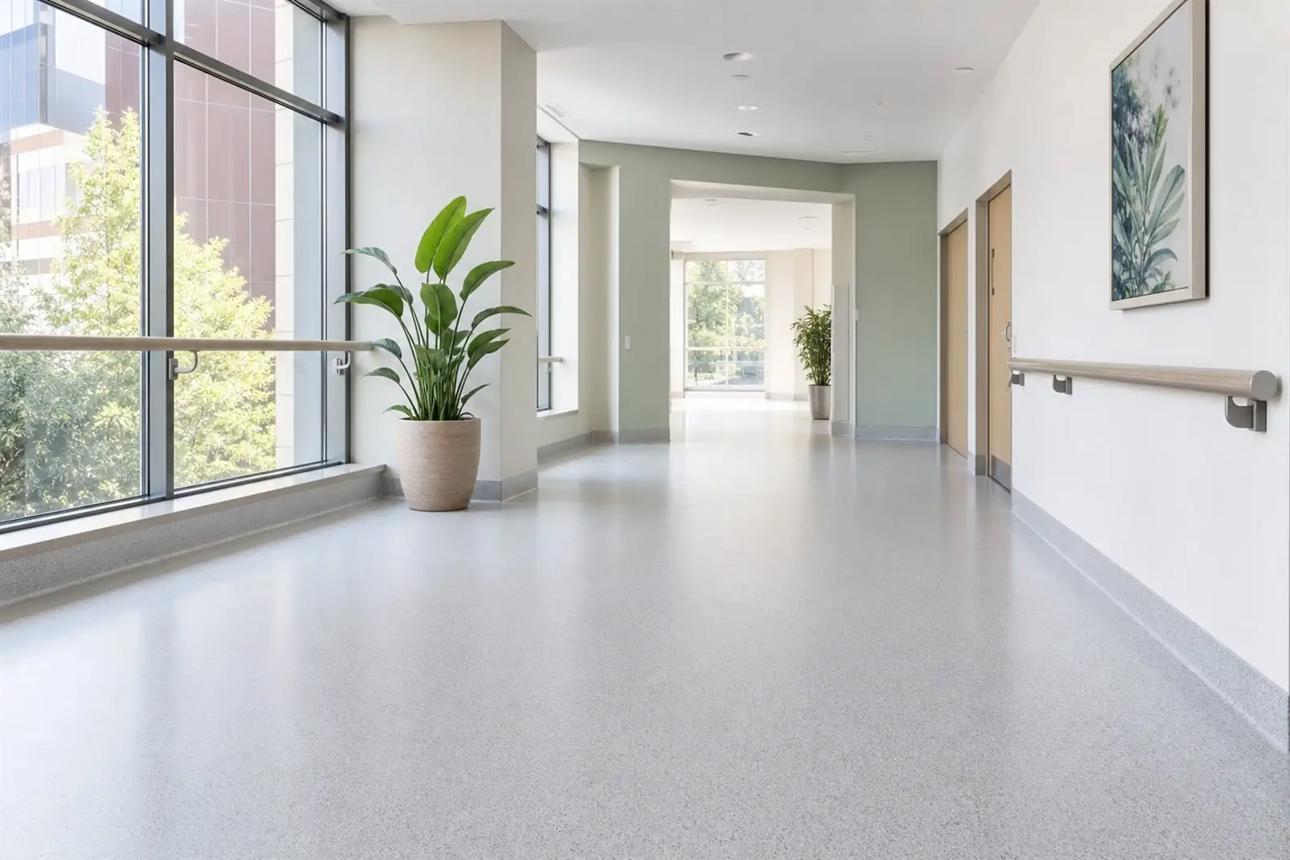
Through-Body Homogeneous Flooring – Anti-Bacterial Chemical Resistant Homogeneous Vinyl Flooring for Medical, Laboratory and High-Traffic Institutional Spaces
Related Article
