Why Are More People Switching to SPC Flooring? These 5 Reasons Tell You Why
2026-06-04
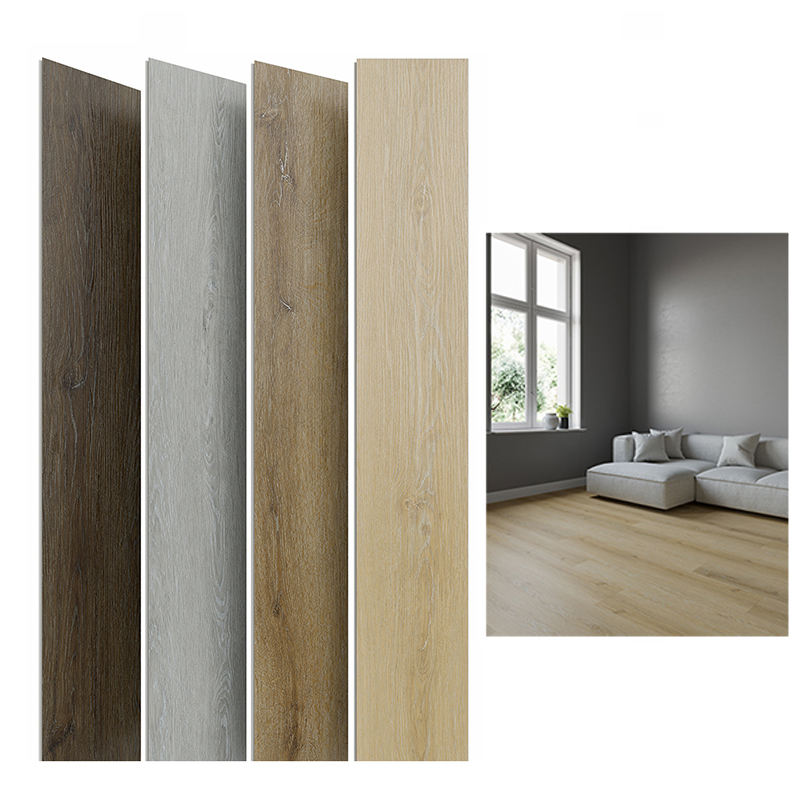
Choosing flooring material for a renovation can be tricky. Hardwood looks warm, but fears water and scratches. Tile is durable, but cold and slippery. Traditional laminate raises concerns about VOCs. Then came SPC flooring – a solid answer to all these problems.
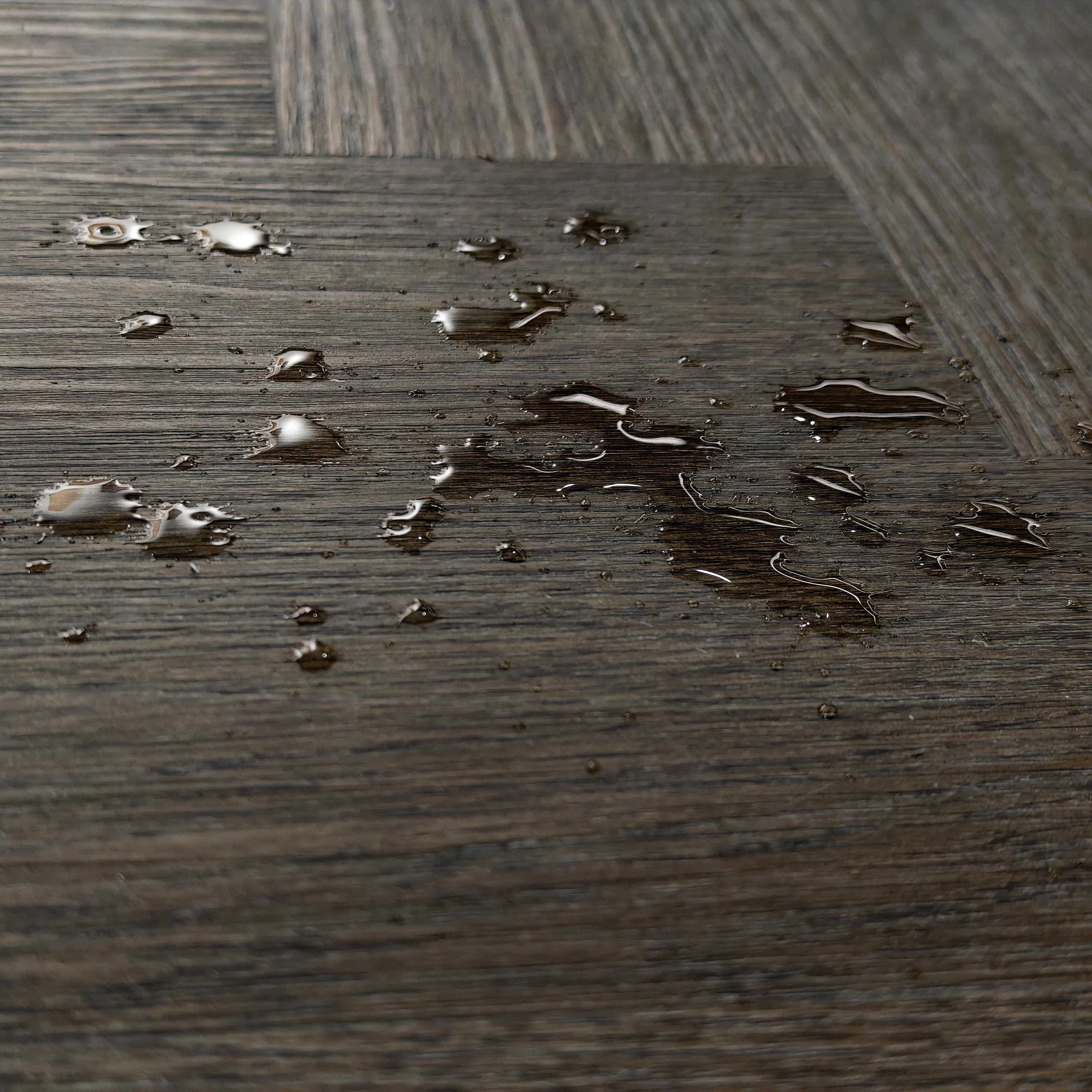
1. 100% Waterproof – Even Safe Under Flooding
The core layer of SPC flooring is made from limestone powder and stabilized PVC, compressed under high heat – no wood byproducts at all. This means:
· Spills in the kitchen, rain on the balcony, humidity in the bathroom? No worries.
· Moisture from the subfloor (especially with radiant heat) won't damage it.
· No more worrying about mop water seeping into the gaps.
· Moisture from the subfloor (especially with radiant heat) won't damage it.
· No more worrying about mop water seeping into the gaps.
Even after prolonged soaking, SPC flooring won't swell, warp, or delaminate. It's a game-changer for pet owners and anyone who prefers wet cleaning.
2. Zero Formaldehyde – Move in with Confidence
Traditional laminate flooring often raises concerns about slow formaldehyde release from adhesives. SPC flooring requires no glue during production – its core contains zero formaldehyde. It meets major certifications like FloorScore, REACH, or CARB. No off-gassing smells after installation. Ideal for:
· Homes with infants or elderly family members
· People sensitive to chemical odors
· Immediate occupancy (renovations, quick rental upgrades)
· People sensitive to chemical odors
· Immediate occupancy (renovations, quick rental upgrades)
3. Compatible with Radiant Heating – Even Heat Transfer
SPC flooring is typically 4–8mm thick – much thinner than solid hardwood or cork. Its thermal resistance is low, allowing heat from underfloor systems to transfer quickly and evenly. The material is dimensionally stable, so it won't crack or bubble under repeated heating and cooling cycles. A strong candidate for radiant-heated homes.
4. Extremely Wear-Resistant – Pet & Heel Friendly
The surface of SPC flooring is coated with a clear wear layer (0.3–0.7mm thick), rated up to AC4–AC5 commercial standard.
· Dragging chairs or dropping scissors won't leave obvious dents
· Pet claws won't scratch the surface
· High heels won't create pinpoint pressure marks
· Pet claws won't scratch the surface
· High heels won't create pinpoint pressure marks
Daily cleaning is simple – a robot mop or wet mop is enough. No waxing or special maintenance required.
5. Simple Installation – Refloor Your Whole Home in Two Days
Most SPC flooring uses a click-lock system – no glue, no nails. It floats directly over existing floors (tile, concrete, old hardwood).
· No need to remove old flooring – saves demolition costs
· A utility knife is all you need for cutting
· Installation speed: approximately 5–8 minutes per square yard
· A utility knife is all you need for cutting
· Installation speed: approximately 5–8 minutes per square yard
Great for DIY enthusiasts or anyone who wants a quick, hassle-free refresh.
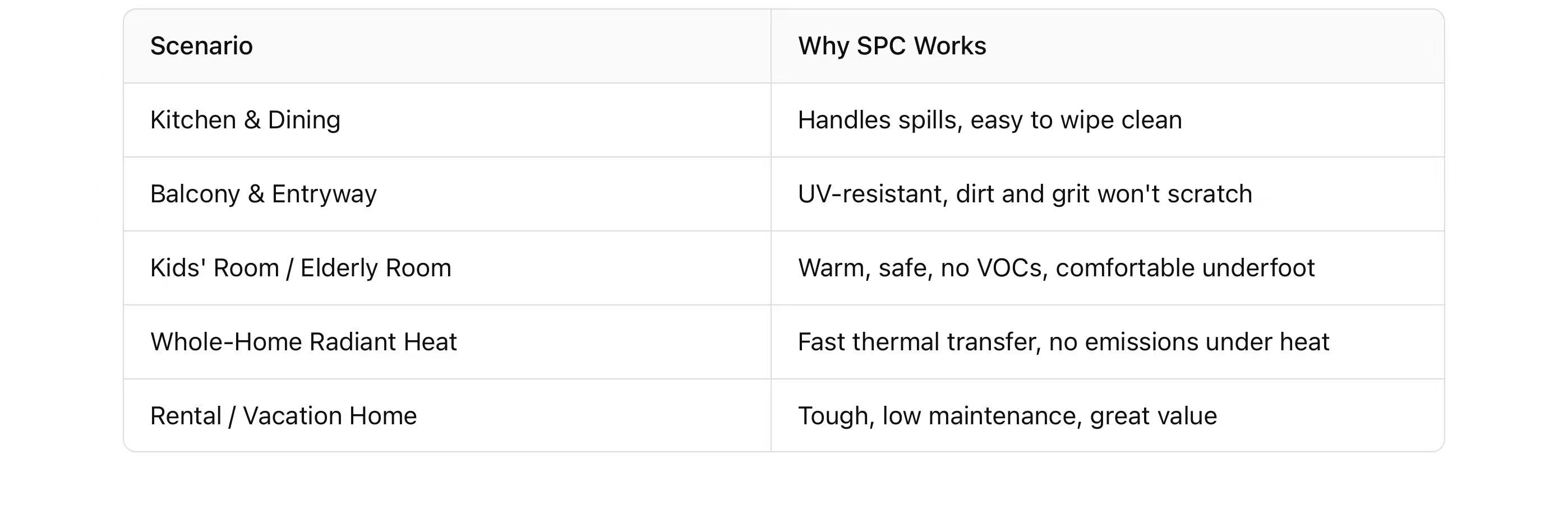
Real-World Use Cases: Who Is SPC Best For?
FAQ Section
Q: Does SPC feel hard underfoot?
A: It's more flexible than tile. With an optional IXPE underlayment, the feel is similar to engineered wood, while reducing footstep noise.
A: It's more flexible than tile. With an optional IXPE underlayment, the feel is similar to engineered wood, while reducing footstep noise.
Q: Does it look and feel like plastic?
A: Modern SPC uses high-definition printing layers that accurately replicate wood, stone, or concrete textures – complete with embossed-in-register surface grain. Visually and tactilely, it's very close to natural materials.
A: Modern SPC uses high-definition printing layers that accurately replicate wood, stone, or concrete textures – complete with embossed-in-register surface grain. Visually and tactilely, it's very close to natural materials.
Q: How is SPC different from WPC or LVT?
A: SPC is the densest, hardest, and thinnest. WPC is softer and quieter. LVT is often a flexible sheet. For most residential applications, SPC is recommended: stable, impact-resistant, and easy to maintain.
A: SPC is the densest, hardest, and thinnest. WPC is softer and quieter. LVT is often a flexible sheet. For most residential applications, SPC is recommended: stable, impact-resistant, and easy to maintain.
Premium SPC Flooring | 100% Waterproof, Durable & Easy Click Installation
SPC Flooring: Pros, Cons, Layer Structure & Buying Guide 2026
Related Article

SPC flooring, rigid vinyl SPC flooring, click-lock SPC flooring, waterproof SPC flooring, formaldehyde-free SPC flooring, residential SPC flooring, commercial SPC flooring, stone plastic composite flooring, scratch resistant SPC flooring
Waterproof Click-Lock SPC Flooring – Formaldehyde-Free Rigid Vinyl SPC Flooring for Residential Renovation and Commercial Engineering Projects
SPC flooring, rigid vinyl SPC flooring, click-lock SPC flooring, waterproof SPC flooring, zero-formaldehyde SPC flooring, scratch resistant SPC flooring, residential SPC flooring, commercial SPC flooring
2026 Trendy SPC Flooring – Zero-Formaldehyde Waterproof Click-Lock Rigid Vinyl SPC Flooring for Residential Renovation and Commercial Engineering Projects
SPC Flooring, Rigid Vinyl SPC Flooring, Click-Lock SPC Flooring, Waterproof SPC Flooring, Formaldehyde-Free SPC Flooring, Scratch Resistant SPC Flooring, Residential SPC Flooring, Commercial SPC Flooring
Durable Click-Lock SPC Flooring – Formaldehyde-Free Waterproof Rigid Vinyl Flooring for Modern Residential and Commercial Renovation
SPC flooring, rigid SPC vinyl flooring, click-lock SPC flooring, waterproof SPC flooring, scratch resistant SPC flooring, formaldehyde-free SPC floor, residential SPC flooring, commercial SPC flooring
Stable Click-Lock SPC Flooring – Waterproof, Scratch Resistant & Formaldehyde-Free Rigid Vinyl SPC Flooring for Residential and Commercial Decoration