Several Common Expressions for Plastic Flooring
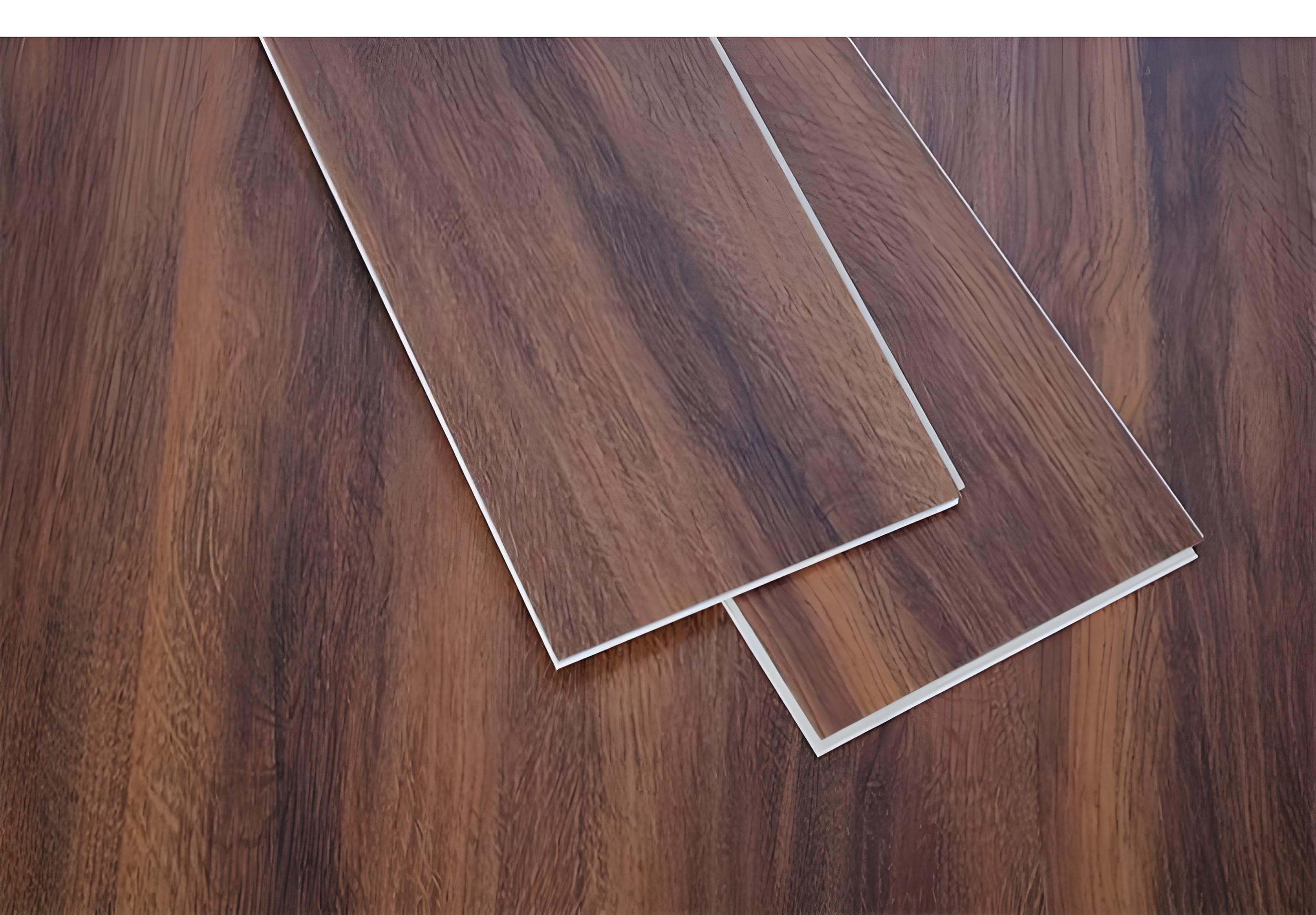
Overview of Plastic Flooring Polyvinyl chloride is the primary component. Originating in Europe and America, PVC flooring is widely used throughout these continents as well as the Asia-Pacific area. In China, 2.0mm commercial flooring is now more prevalent, while SPC and WPC flooring are also gaining traction over time.
1.Several common expressions for plastic flooring
PVC: poly vinyl chloride
LVT: luxury vinyl tile
LVP: luxury vinyl plank
Vinyl floor
Vinyl plank
WPC: wood plastic composite
SPC: Stone-plastic composite, or SPC This kind of rigid plastic floor is known as RVP (rigid vinyl plan) in both European and American nations.
2. Plastic Flooring Classification
There are now two varieties of PVC sheet flooring. One is a transparent, uniform flooring that has the same pattern material throughout. A polishing machine can be used to wax a surface that has been scorched or scraped. Another kind is a composite, in which a printed layer and a foam layer are layered atop a clear, pure PVC layer at the top. It is evident that the transparent material of the same grade is far preferable to the composite kind.
The items included in this article are LVT and WPC flooring, which are classified as semi-rigid sheet plastic flooring, and SPC (RVP) flooring, which is classified as rigid sheet flooring. From a morphological standpoint, it may be separated into roll flooring and sheet flooring. There are now three primary varieties of LVT flooring: loose lay, dry back, and vinyl locking. From a different angle, PVC flooring may be separated into three categories based on how it is assembled: loose lay, click lock, and dry back. In addition, SPC stone plastic flooring and WPC wood plastic flooring are being aggressively marketed and expanding quickly in both local and foreign markets.
3. The composition of plastic flooring
Ingredients for PVC flooring include stabilizer, PVC resin powder, stone powder, and internal and exterior lubricants such as ACR, CPE, and carbon black, which is mostly made up of polyvinyl chloride and stone powder.

Glass fiber, ornamental paper, a core layer, a backing layer, and a wear-resistant layer run from bottom to top in plastic flooring.
4. Certification for PVC
PVC goods are now certified by TÜ V Rheinland, Germany, with a Floor score, DIBT, CE, ISO14001: 2004, and ISO9001: 2008.
5. The most important PVC stability product indications are: According to line standards, the product shrinks and expands at a rate of 0.25% and 0.15% after 6 hours at 80 °C.
EN<2mm; Enterprise standard: 1.2mm (dryback); 1.0mm (click); 0.5mm (loose lay); heating warpage: 80 °C for 6 hours
Buckle tension: 5.0mm>13-15kg/5cm, 4.2mm>12kg/5cm at room temperature (23 °C). 4.2mm>15–18 kg/5 cm if V-buckles are used on the short side.
Peeling strength: The degree to which the colored film adheres to the intermediate material; it is also a minor metric used to assess how resistant freshly recycled materials are to wear and scratches.
• Luminance: 10+/-2
6. Floor purchase area calculation: If the area that has to be paved is 50 square meters, the real size is 50 * (1+5%) = 52.5 square meters since a portion of the floor must be sawed off to the corner and the general floor loss rate is 5%.
The Unique Characteristics of Anti-static Flooring
How to ensure a longer service life of homogenous PVC flooring
Related Article
