The Difference Between Directional & Non-Directional Homogeneous Sheet Vinyl Flooring
2016-09-11
As floor materials continue to develop and upgrade, the types of flooring become more and more diverse, among which directional and non-directional homogeneous sheet vinyl floorings are two common types. Although they are similar in appearance, there are significant differences in manufacturing, patterns, materials etc.
1.Manufacturing Difference
The production of directional homogeneous flooring is a one-time molding process, while non directional flooring is a multiple molding process.One molding process (directional type) simple and fast, high floor density; Multiple molding process (non-directional type) is more complex, and the density of the sheet vinyl flooring rolls will be reduced, greatly improving the wear resistance and extending the service life of the floor.
2.Patterns Difference
Directional and non-directional are distinguished from the pattern.Directional homogeneous flooring has a neat texture pattern due to its fitted design, while the pattern and texture of non-directional homogeneous flooring are more natural and random, making it more natural and appealing.
3.Difference in Materials
The main raw material of the homogeneous floor is polyvinyl chloride resin, mixed with toner, stabilizer, plasticizer, pigment and other auxiliaries. The non-oriented type has a higher proportion of PVC, which brings lower weight and higher strength.
4.Difference in Application and Installation
Directional homogeneous flooring is suitable for large-scale paving to achieve a unified flooring effect, while non-directional homogeneous flooring is suitable for partial paving or specific design needs. During installation, directional homogeneous flooring is quick and easy to install, while non-directional homogeneous flooring requires more time to assemble and arrange.
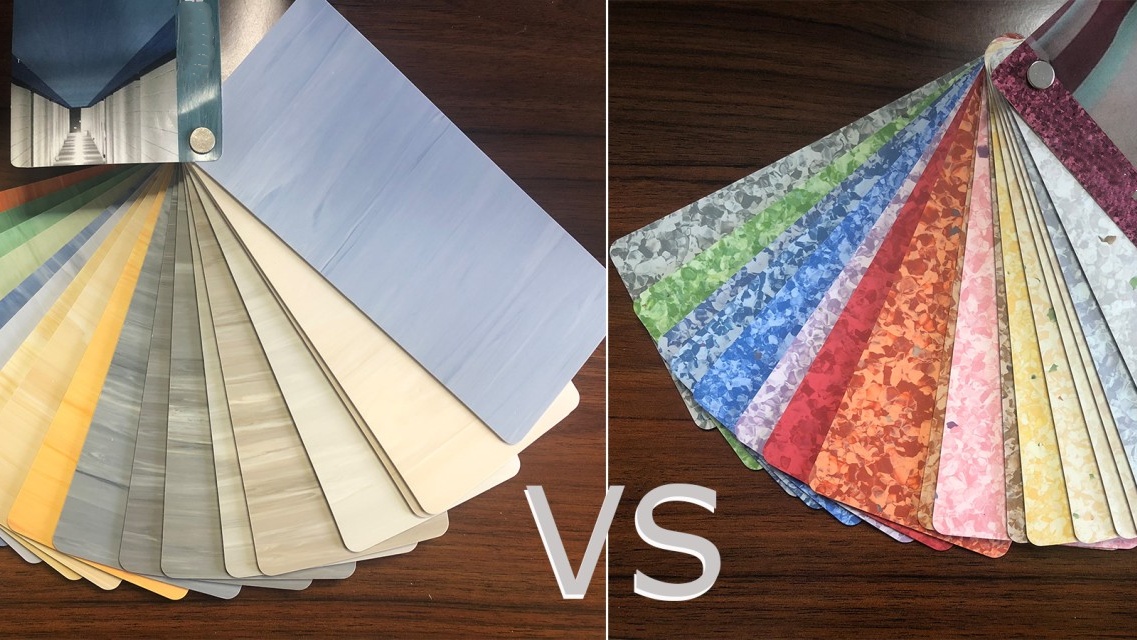
In summary, there are many differences between oriented and non-oriented homogeneous vinyl flooring. But both types of flooring are durable and easy to maintain, making them ideal for commercial applications. The choice of which flooring to use often depends on the aesthetics of the space and the desired effect.
How to install PVC homogeneous flooring
What is PVC homogeneous flooring?
Related Article

PVC flooring has become a popular flooring choice for homes, hospitals, schools, offices, and other commercial spaces due to its durability, water resistance, and easy maintenance. However, proper cleaning is essential to maintain its appearance and extend its service life.
How to Clean PVC Flooring: A Complete Guide to Daily Cleaning and Maintenance
Homogeneous flooring, homogeneous vinyl flooring, through-body homogeneous flooring, anti-bacterial homogeneous flooring, chemical resistant homogeneous flooring, medical grade flooring, seamless hygienic flooring, high traffic institutional flooring
Through-Body Homogeneous Flooring – Anti-Bacterial Chemical Resistant Homogeneous Vinyl Flooring for Medical, Laboratory and High-Traffic Institutional Spaces
Homogeneous flooring, homogeneous vinyl flooring, through-body homogeneous flooring, anti-bacterial homogeneous flooring, chemical resistant flooring, medical grade homogeneous flooring, high traffic institutional flooring, seamless hygienic flooring
Through-Body Homogeneous Flooring – Anti-Bacterial Chemical Resistant Homogeneous Vinyl Flooring for Medical, Laboratory and High-Traffic Institutional Spaces
Homogeneous flooring, homogeneous vinyl flooring, through-body homogeneous flooring, anti-bacterial homogeneous flooring, stain resistant homogeneous flooring, hospital flooring, laboratory flooring, high traffic public flooring
Full Through-Body Homogeneous Flooring – Anti-Bacterial Stain Resistant Homogeneous Vinyl Flooring for Hospital, Laboratory and High-Traffic Public Areas